
I think the entire premise for this Substack blog newsletter stems from jazz.
After 95% of a completed first draft, a realization happened — I wasn’t writing a cultural history or a traditional non-fiction book. I was writing a memoir.
Once this became my path, I cried. I hadn’t planned on being this honest, my original book pitch was “how about we release my greatest hits” (which was followed by a statement resembling “this ain’t 2017 any more bruh bruh, new shit).
At some point, I dried my eyes. But outside opinions became mind clutter. And there were so many, from group texts to comment sections to real life. So I took a first step and cut out podcasts, a great deal of my social media intake, and a variety of YouTube videos. But that was still not enough.
There was still music. And I was still listening to my normal intake of music — old and new rap, old r&b, old rock, “Borderline” by Madonna — all music with lyrics. It was still too much.
My instinct was to cut music entirely, as to achieve ultimate silence in my brain. But I wasn’t depressed. And going weeks at a time without listening to music was the easiest sign that I’m sad. So music couldn’t fully go away.
But maybe the lyrics did.
I’d gotten here twice before, both time resulting in a classical binge. Tchaikovsky is my guy, as is Rachmonimoff and Mozart. But I was writing about black people. And for the same reason that I was writing this book from my studio in Inglewood (and not one of the three layman Soho Houses in Los Angeles), I needed to hear black sounds. Collard greens over crudités.
So, for the first time in my life, I considered jazz.
I didn’t know where to start, but I figured if I didn’t like Miles Davis, then I probably wouldn’t be into jazz.
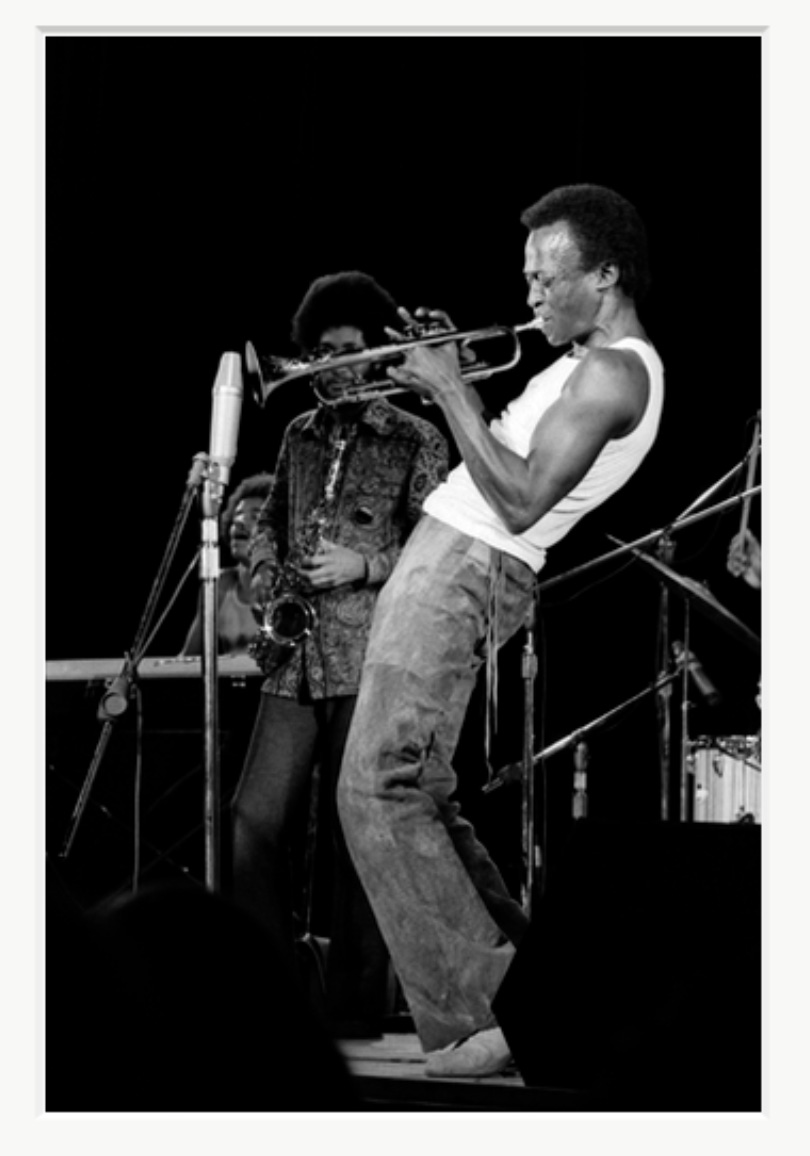
I did some light googling of Miles, which exposed me to his two Quintets. The First Great Quintet, from 1955-1958, which included Philly Joe Jonas on drums, Paul Chambers on bass, Red Garland on piano, Miles on trumpet, and John Coltrane on tenor saxophone.
From 1963-1968, he had his Second Great Quintet, which featured Tony Williams on drums, Ron Carter on bass, Herbie Hancock on piano, Miles on trumpet, and Wayne Shorter on tenor saxophone.
I knew of people from both quintets, seems like Miles was the shit. I wanted to know what they cooked up. But also, what was up between 1958 and 1963? Why was he quintetless? What about after ‘68, I know he was making more music.
So I spent Q1 listening to 41 Miles Davis albums, from 1956 to 1977. 21 years of music.
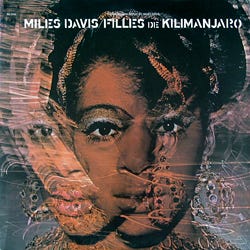
I know I’m not alone, when it comes to not being up on my jazz. So I’ll spend Q2 in a groove, re-listening to Miles and studying the tracks that stand out to me. And also, potentially, going down rabbit holes of his contemporaries. I love it when the greats collaborate, it’s like a musical Peak Blackness.
To start, here are 72 songs that stood out to me.
They’re primarily in chronological order (of when they were recorded, not released). That’s over 13 hours of music, which is both helpful and annoying. So in Q2, many smaller playlists will be made, ones for different parts of our day.
This is great but I have to know how you learned so much about Classical but not jazz? Did you avoid it? Did it just never hit?