

Marcus Moore is a music journalist, professor, event curator, editor. And as an author, he has written two books, The Butterfly Effect (a Kendrick Lamar biography) and High and Rising (A Book About De La Soul). Read both.
This interview begins, mid-conversation.
~~~~~
Marcus: For me, it’s always Bitches Brew, but it’s also the albums that led up to that record. Going backwards, it’s In A Silent Way, I love that record. And then the record before that, that I feel like doesn’t get enough credit is the Kilimanjaro record.
Rembert: Kilimanjaro was one of the first ones where I was like, “oh, I get it.” And that run of albums was also my favorite, before and after Bitches Brew. Nefertiti, Miles in the Sky, Kilimanjaro, In A Silent Way, and then Jack Johnson after it, Black Beauty, Fillmore West. It’s a stretch from 68 to like 71-72, that feels comparable to a Stevie Wonder 5 album run or other classic runs that we’ve seen.
Marcus: I feel the exact same way. I’m still a music nerd, so, you know, when I’m discovering Bitches Brew, that’s just when CDs are still very much a thing. So I’m going to FYE every weekend and I’m just buying all the Miles Davis records. I’m buying Miles in the Sky. I’m buying Live Evil, the Jack Johnson record. I can appreciate people who say like, no, Miles of like the forties and fifties is their jam, you know, Sketches of Spain. It’s like, okay, I get it, I understand that. But me personally, it’s always that run of like the late sixties to the early, early seventies.
Now, what I’ve also learned when you talk to younger jazz musicians, some of them, their intro is Miles of the eighties. That’s the stuff that’s a little harder to listen to. But from the mid sixties, the early seventies, Miles was on fire. I would argue that the Second Great Quintet might be the best band of all time of any genre.
Rembert: It’s pretty nuts. You could just stick with that one quintet and go down each person’s rabbit hole and musical career, which will lead you to so much more music. It almost feels like Miles has a coaching tree. All the people that played for him who were “assistants” then became lords themselves. So it’s very cool. But that second quintet is nuts.
Marcus: Yeah, because even if you take the Bitches Brew sessions alone, you know, you got somebody on there like a Benny Maupin, who is a clarinetist. And he has an album that comes out in 1974 called the Jewel in the Lotus that is, I would argue, a cornerstone spiritual jazz album. You know, you got Chick Corea, you got Wayne Shorter on there, you got all these people that are just in the session doing the thing. You have royalty that’s just like, improvising the Mona Lisa pretty much.
Rembert: When do you find yourself interacting with like, the 50s, 60s miles? Does it happen?
Marcus: It does, but not as much. I had the pleasure of writing the liner notes for a recent reissue. Well, no, not even a reissue — this music’s never come out. It was called Miles in France. It’s a box set.
Rembert: Not to interrupt you, but jazz also made me understand box sets. Finally. If if there was an eight hour box set of In a Silent Way, (6:19) I’d be like, let’s spend all day listening to this.
Right.Yeah, man. But when it’s time for me to go back to the 50s and 60s, I find that I listen to like Someday My Prince Will Come. And I can’t remember when Sorcerer came out.
Rembert: That’s leading into the late 60s. Sorcerer is awesome. I’d forgotten that Miles Davis was married to Cicely Tyson. She is on the cover of Sorcerer. That was cool.
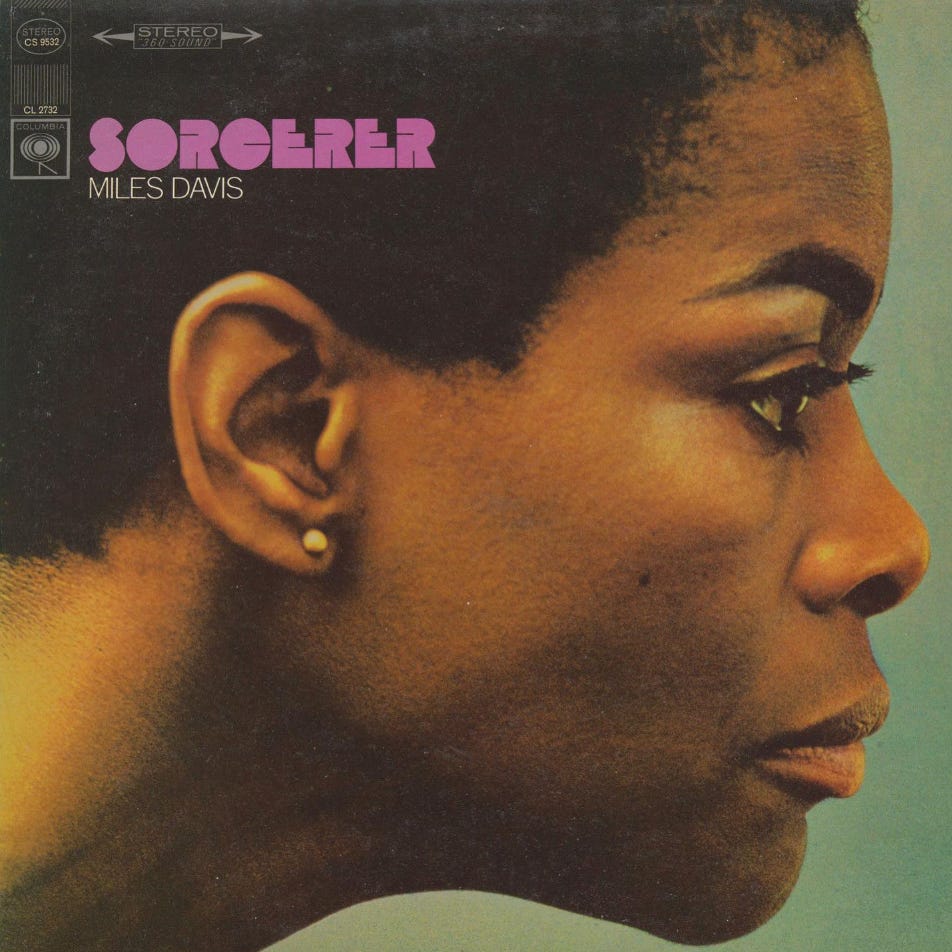
Another question, what’s your feeling on the on the live albums? And listening to live jazz in general in record form. I’m very into live black music. Sometimes it’s because of how the crowd interacts and becomes a character in the music. Other times, I’m just like, damn, like the Commodores had a great ass band. I’m so glad they made a live album. But I was finding myself drawn to hearing the hearing a live version of a song that I was slightly into on the record version, but then it like took a new life, live.
Marcus: I want to say it was just called Live at Fillmore East. I think it was 1970, I believe. And that’s the record that has different versions of “Directions” on it. Has different versions of “Bitches Brew” and “The Theme.” It has different versions of a bunch of different songs on there. So when you when you think about it, there’s not a whole ton of music on there. But the thing I appreciate about Miles’ live music in and of itself is the fact that like, to your point, you can listen to the song “Sanctuary.” That might be my favorite Miles Davis song ever written by the legendary Wayne Shorter. So you can listen to “Sanctuary” in this iteration on Fillmore. But then you listen to it on Black Beauty or you listen to it elsewhere, you may see a random YouTube clip. And the thing I always appreciated about Miles is that it’s never going to sound the same.
And in speaking with his collaborators, it was him trying to challenge convention. And it was him trying to challenge himself to do it differently. So going back to the Miles in France box set that I had the honor of contributing to, you’ll notice that everything on there is super quick. Like, you know, they’re playing all the Kind of Blue material, but it’s at this breakneck pace. And when I spoke with Ron Carter about it, he was saying that that was them trying to challenge themselves night in night out because they knew they were going to be playing this music on the road in France for like months at a time. And he said that that was the youngins in the band really trying to push boundaries — him, Herbie and Tony Williams, just trying to make something that was well beyond what Miles was playing. And to Miles’ credit, even though a lot of times he was older than the people that he played with, he wasn’t so boxed in by his age. He allowed the youngins to push him in these new directions that were probably beyond his comfort zone, but he would still go there. And, you know, one could argue that some of this live music from that era, from the early 70s, some people go to that before they go to the studio versions. Even when it’s time for me to drive out sometimes, I’m like, oh, let me play this Live At Fillmore because some days I just need trumpet blaring in my head and Lord knows he’s playing all over that one.
Rembert: Did you see the Sly Stone doc?
Marcus: Oh yeah.
Rembert: I loved hearing how much Miles was into Sly. I love most tales of inspiration, but there is something about the two of them that does feel very spiritually and musically connected.
Marcus: Absolutely. Because I feel like both of them just kind of stuck to their creative ingenuity. It’s not until you start talking to these musicians and these famous people that you realize a lot of them just stick to their guns, so to speak. But Sly, his career is him following whatever creative path he’s on. And I think Miles could appreciate that because Miles did the same exact thing.
Rembert: Understanding that late 60s to early 70s period of Miles, which you appreciate is also the period that spoke the most to me, I have a question. What other jazz do you think I should listen to?
Marcus: I would say right away, you need to hear Albert Heath. He came out with this album called Kawaida. It is an incredible record. I’m talking like, one of those albums where Herbie Hancock is just randomly playing piano on it and James Mtume playing percussion. It’s just like, what? But the record is stunning. Speaking of James Mtume, have you heard the Mtume Umoja Ensemble record?
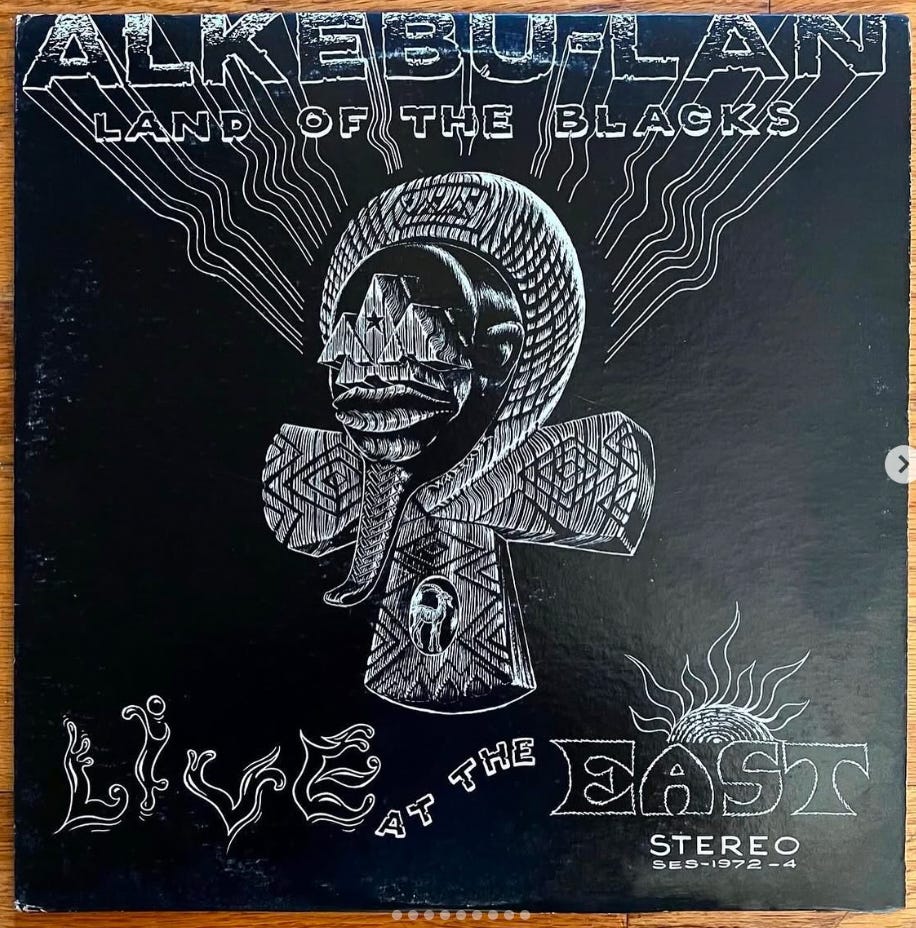
That’s a fascinating record. I would also say listen to this vibraphonist, a gentleman named Lon Moshe. It’s this album called Love is Where the Spirit Lies. Okay. Came out on Blackfire Records. And then lastly, I would say listen to Black Renaissance. The band is called Black Renaissance, but it was really Harry Whitaker. They have a song called “Magic Ritual” that is amazing.
Rembert: Marcus, thank you for talking to me about Miles and jazz.
Marcus: Of course, man.
Interesting. Phillies was the first Miles album I bought and I didn’t get it ((is this drummer in the same room with the rest of the band?). Many years later, it’s in my top five Davis albums.
Thanks for the recommendations; be checking them out.